
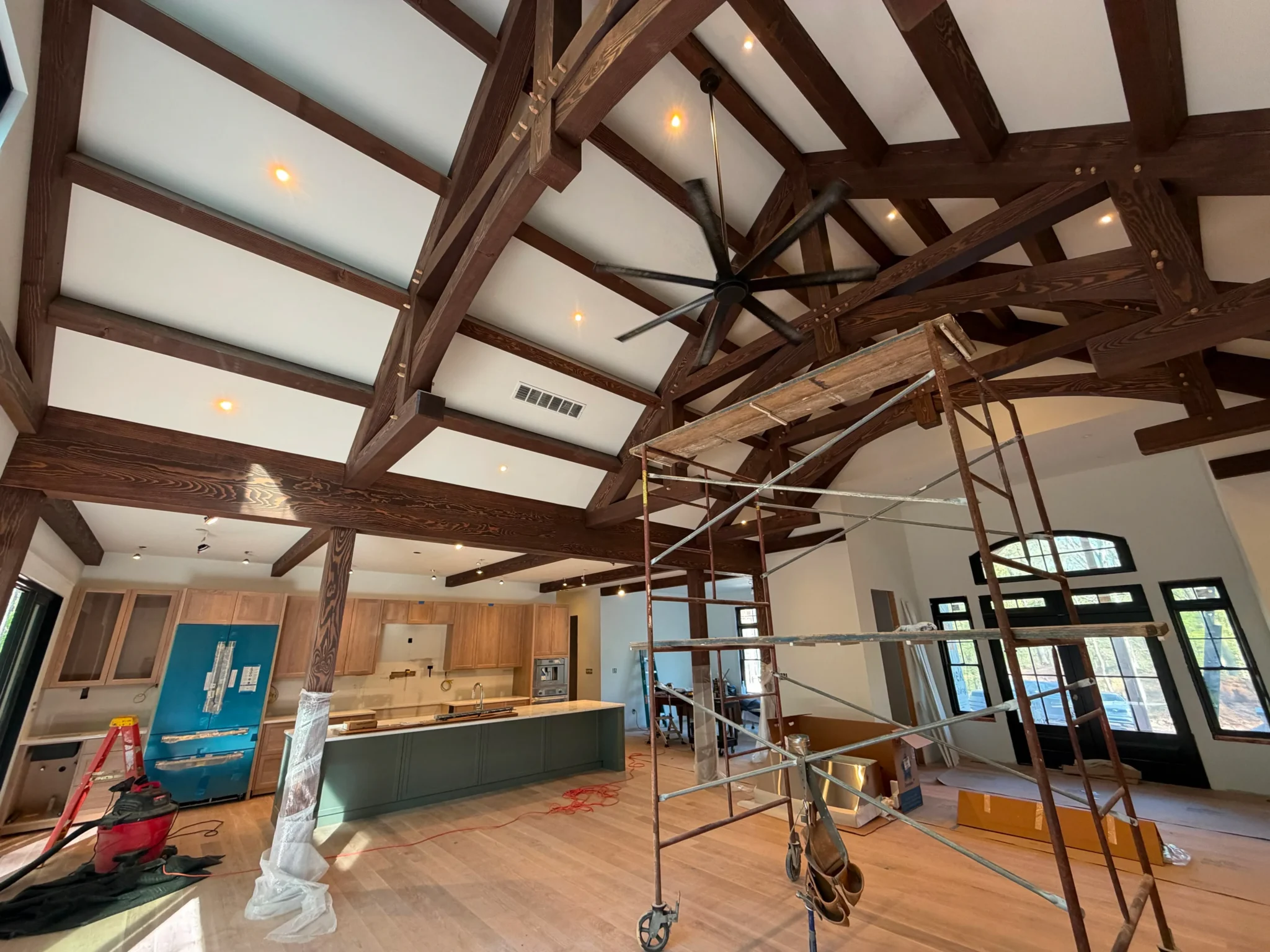
Renovating a historic home in Bucks County means balancing modern comfort with period character — and, in many towns, working within historic-district rules. The rewards are real: craftsmanship and provenance you can’t replicate. So is the homework: approvals, the right materials, careful sequencing, and a plan that modernizes without erasing what makes the home special. This guide walks through all of it.
Know the rules before you design
Many of New Hope’s and Bucks County’s historic homes sit within local historic districts. Where they do, exterior changes visible from the street are typically reviewed by a Historical Architectural Review Board (HARB), and a Certificate of Appropriateness may be required before work begins — in some municipalities above a modest cost threshold. Interior work generally has more latitude. Rules vary by borough and township, so confirm specifics with the local code office at the very start, before you finalize a design. (General guidance, not legal advice.)
Use the right materials
Historic stone homes need lime-based mortar for repointing, not modern Portland cement, which traps moisture and damages stone over time. Sympathetic windows, roofing, and trim preserve both character and value. The instinct to “upgrade” with modern materials is often the costliest mistake in an old home — the right materials are an investment, not an expense.
Sequence the work
Order matters in an old home. Start with a thorough assessment, then address structure, masonry, and water before anything cosmetic. Systems come next, then finishes. Trying to skip ahead to the beautiful parts before stabilizing the bones is how budgets blow up. A clear sequence, set with experienced trades, keeps the project on track.
Modernize what matters
The systems buyers and inspectors care about — wiring, plumbing, HVAC, insulation — are usually the highest-value updates, and they can be modernized invisibly. A beautifully restored façade still benefits from twenty-first-century mechanicals behind the walls. Plan these alongside the cosmetic work, not after.
Comfort upgrades, done sympathetically
Insulation, draft-sealing, efficient heating and cooling, and careful window restoration improve daily comfort and running costs without compromising character. There are period-appropriate ways to achieve modern comfort — the key is choosing methods suited to old construction rather than forcing modern assemblies onto it.
Blend old and new with restraint
The best historic renovations keep period detail — original floors, beams, hardware, stonework — while bringing kitchens and baths up to modern standards. See kitchen design trends for luxury homes and material selections. The aim is a home that reads as authentic, not a gut renovation that happens to sit inside old walls.
Choose the right team
Renovating a historic home rewards craftspeople who have done it before — masons who understand lime mortar, carpenters comfortable with old framing, and an architect or designer fluent in the local review process. The wrong team can do irreversible damage; the right one protects value at every step.
Budget for the unknowns
Old homes hold surprises — behind plaster, under floors, in foundations. Build a meaningful contingency into the budget and timeline, and prioritize a thorough assessment up front. For buyers evaluating a property’s bones, our guide to historic and stone homes covers what to inspect before you commit.
Protect the value you’re creating
Sympathetic, well-documented work protects resale value — the character is the asset. See how to increase home value and designing for long-term property value. Revi’s design background is useful here, helping owners judge both what’s possible and what’s wise; explore Revi Design Studio.
A realistic renovation timeline
Historic renovations rarely move quickly, and planning for that reality from the start prevents frustration and cost overruns. Expect the early phase — assessment, design, and any historic-district approvals — to take longer than it would for a new build, since review boards meet on their own schedules and a thorough assessment of structure and masonry takes time. Once work begins, the discovery of hidden conditions behind plaster or under floors can extend the schedule, which is why an experienced team builds buffer into both the timeline and the budget. Trying to compress these phases is how projects go wrong; respecting them is how they go well.
Sequencing keeps the project on track: assessment first, then structure, masonry, and water, then systems, and only then finishes. Each phase depends on the one before it, and skipping ahead to the visible, satisfying work before the bones are sound is the classic mistake. A clear, realistic schedule agreed with your trades at the outset is one of the most valuable things you can establish, because it sets expectations for everyone and protects the quality of the finished home.
Work with Revi New Hope
For renovating or buying a historic home in New Hope and Bucks County, a conversation grounded in this specific market is the best first step. Revi Haviv pairs luxury real estate experience with design and staging insight through Revi Design Studio. Browse current properties or reach out to Revi and Compass New Hope — thoughtful guidance, no pressure.
Frequently asked questions
Do I need approval to renovate a historic home in Bucks County?
Often for exterior changes in a historic district, via a Certificate of Appropriateness reviewed by the local HARB. Interior work usually has more flexibility. Always check with the local code office first.
What mortar should a stone home use?
Lime-based mortar, not modern Portland cement, which can trap moisture and damage the stone over time.
Can you modernize a historic home without losing its character?
Yes — modernize systems and key rooms while preserving original detail and using period-appropriate materials. Restraint and the right craftspeople are the keys.
How much should I budget to renovate a historic home?
It varies widely with condition and scope. Budget a meaningful contingency for hidden issues, and start with a thorough assessment of structure, masonry, and systems.
What’s the most common mistake in historic renovations?
Using modern materials — especially Portland cement mortar — and rushing to cosmetics before stabilizing structure, masonry, and water issues.
How do I find the right contractor for a historic home?
Look for trades experienced specifically with old homes and lime mortar, plus an architect or designer fluent in the local historic-review process.